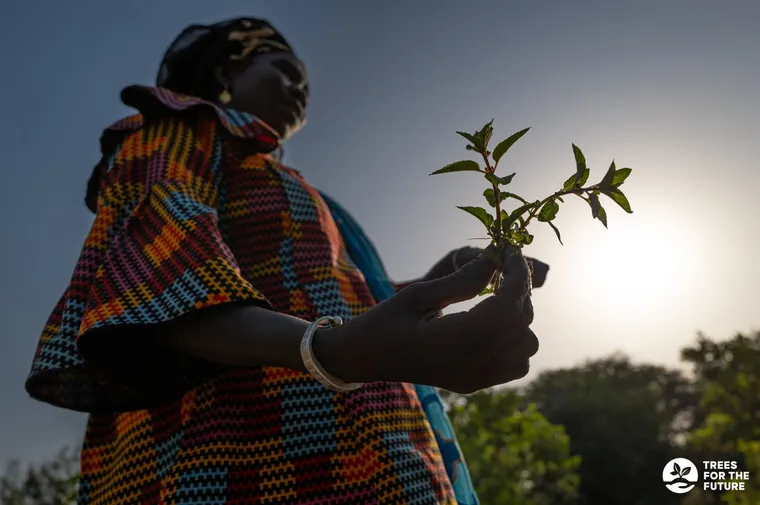
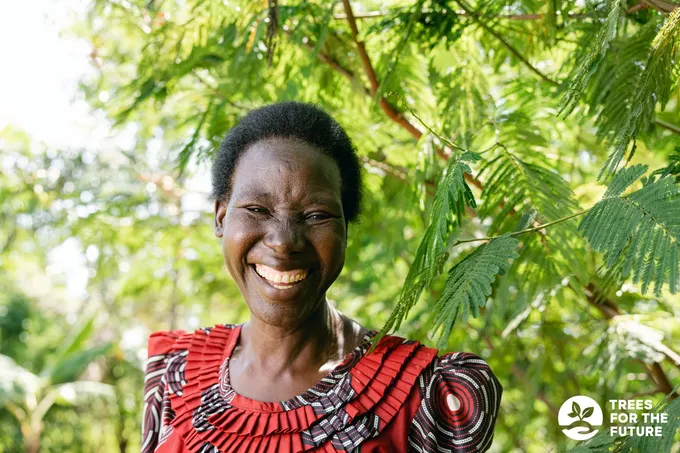
In Uganda, Trees for the Future trains smallholder farmers to turn worn-out land into productive agroforestry plots they call Forest Gardens. Every tree your customers plant lands inside one of these gardens, where it grows food, rebuilds the soil, and brings in income for the family that tends it. After more than 350 million trees, the UN named them a World Restoration Flagship in 2024.
Coaches each farming family through a four-year program of 16 hands-on training modules.
Mixes native and nitrogen-fixing trees to rebuild soil, restore biodiversity, and capture CO2.
Forest Gardens grow far more food and income per hectare than the bare fields they replace.
Forests that feed families.
Trees for the Future flips the usual model. Instead of planting trees and walking away, they hand the trees to farmers and coach them on how to use those trees to grow more food, year after year. The result is denser, cooler, more biodiverse land that the farmer protects, because every tree feeds the family or earns it money.
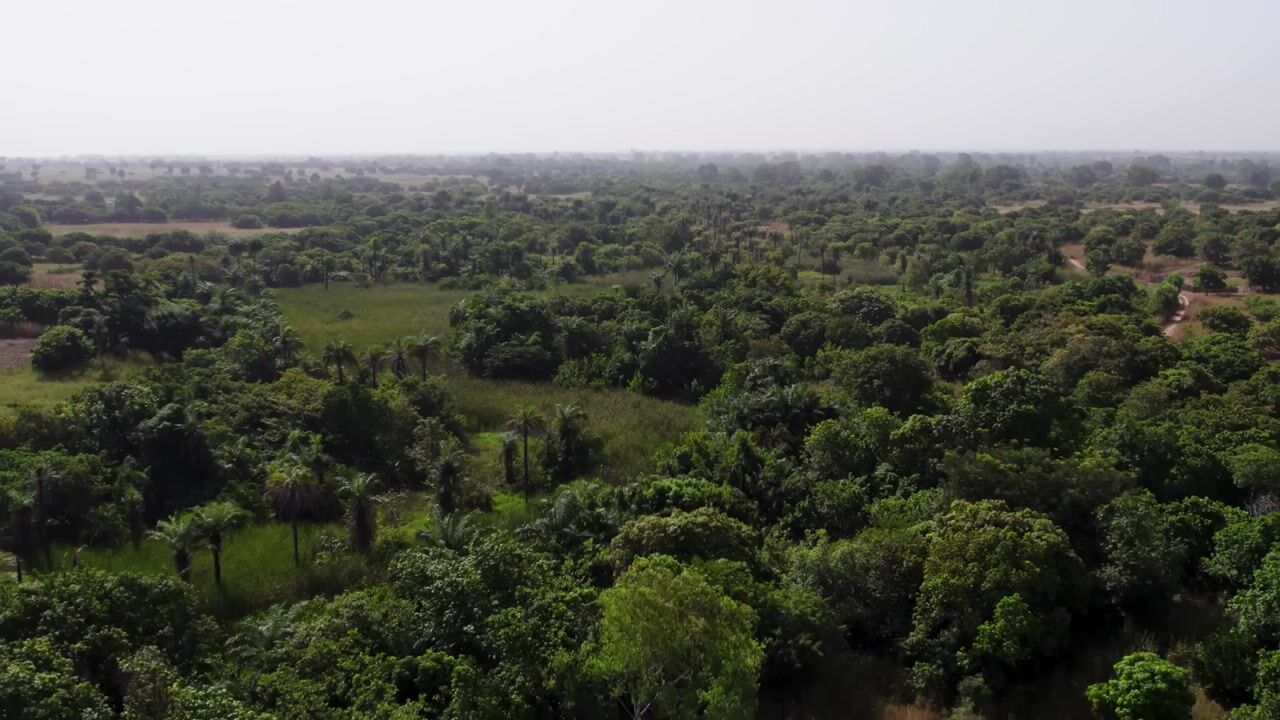
See how a Forest Garden takes shape in this video from the field.
Give farming families a durable source of food and income that lifts them out of poverty.
Ensure sustainable food production systems and implement resilient agricultural practices.

Take urgent action to combat climate change and its impacts.
Protect and restore terrestrial ecosystems, sustainably manage forests, and halt land degradation.
The trees from your customers' reviews are planted in Uganda. Each Forest Garden is about one acre, planted with 2,500 to 4,000 trees mixed with food crops, and a local field team coaches the farmer for four years until the garden runs on its own.
67+ native tree species


